




Gutter Repair in Houston, MS
Houston is the county seat of Chickasaw County, situated in the transitional zone where north Mississippi’s hill country begins to flatten toward the prairie region to the south. That geography matters for drainage. Homes at the edge of rolling terrain experience the kind of fast-moving surface runoff that puts real demands on gutter systems, while properties on flatter ground deal with the slow-draining soil conditions that make foundation moisture a persistent concern.
Ensz & Sons Gutters has been doing gutter work across this part of Mississippi since 1991. We understand the range of conditions homes in communities like Houston face, and we approach every repair with an eye toward what will actually hold up in this climate long term. About 80% of our business comes from referrals and repeat customers, and we take that trust seriously on every job.
Our Services
- Aluminum Gutter Installation & Repair
- Commercial Gutter Installation
- Copper Gutter Installation & Repair
- Custom Gutter Installation & Repair
- Downspout Drain Installation & Repair
- Gutter Cleaning Services
- Gutter Guard Installation
- Gutter Helmet Installation
- Gutter Installation
- Gutter Inspection
- Gutter Repair
- Half Round Gutter Installation & Repair
- Leaf Guard System Installation
- Seamless Gutter Installation & Repair
- Steel Gutter Installation & Repair
- Zinc Gutter Installation & Repair
Contact Us
Why Homeowners in Houston, MS Trust Us
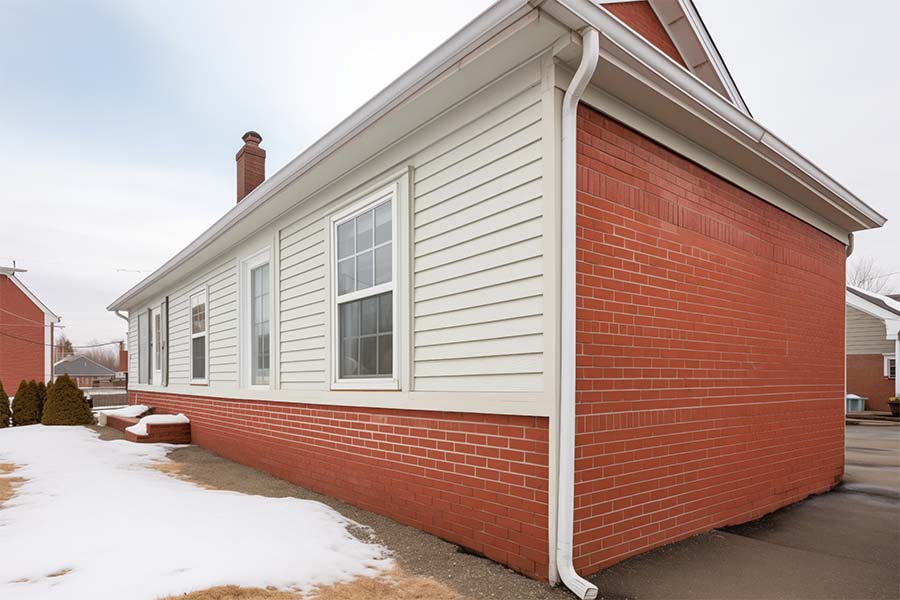
How Houston Homes Show Gutter Trouble
Chickasaw County receives over 55 inches of annual rainfall, and the stretch from late winter through early summer is the most intense period for gutter systems here. Because Houston’s housing stock includes both older homes near the downtown square and newer construction spreading outward, the signs of gutter trouble span a range of causes but tend to show up in consistent ways.
- Gutters visibly full or overflowing during a rain of moderate intensity, which points to a blockage, a pitch problem, or both working together.
- A wet band of soil or a bare erosion line running along the foundation of the home after rain events, indicating concentrated discharge at the base.
- Paint or finish peeling away from wood trim at the roofline, which happens when moisture has been present for an extended period and the wood has started to cycle between wet and dry repeatedly.
- Gutters that flex or shift when you apply light hand pressure to them from a ladder, a sign hangers have loosened or pulled out of the fascia.
- Any section of gutter where the channel has visibly twisted or warped, which creates a disruption in flow that results in overflow at that point.
On Houston’s older homes especially, addressing these signs before the heavy spring rain season arrives is the most cost-effective approach.
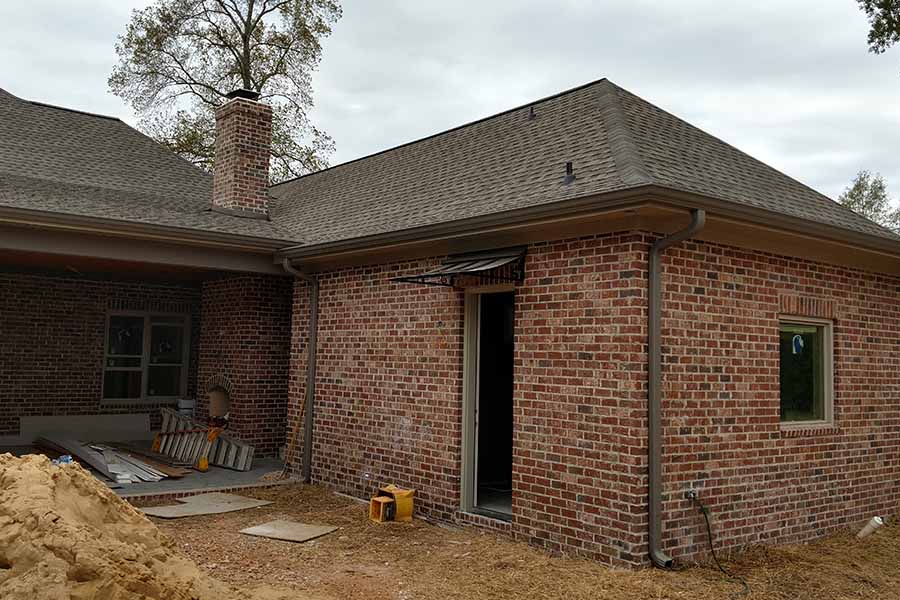
The Gutter Repairs We Perform Most Often in Houston
Houston’s housing market includes a significant inventory of homes built between the 1950s and 1980s, a generation of construction where aluminum gutter systems were standard and the installation hardware of the era has now been cycling through Mississippi summers for several decades. The repairs we perform reflect that history.
- Removing and replacing original spike-and-ferrule hangers that have worked their way loose from the fascia over years of thermal expansion and contraction.
- Resealing leaking joints and end caps on sectional aluminum systems where the original compound has long since dried and cracked.
- Correcting gutter pitch on runs where the original installation was only marginally adequate and has now shifted to level or reverse slope.
- Reattaching separated gutter sections and addressing the fascia board damage that allowed the separation to occur.
- Repositioning or extending downspout discharge so water is carried away from the foundation rather than deposited at it.
Every repair starts with a full system assessment so we know the complete picture before we recommend what needs to be done.
Why Houston Homeowners Should Not Let Gutter Repairs Sit
Houston’s position at the edge of Mississippi’s hill country means some properties are dealing with slope-driven runoff while others are managing slow-draining flat-ground soil conditions. Both situations amplify the consequences of a failing gutter system, though in different ways. On sloped lots, concentrated runoff from an overflowing or missing gutter section reaches the foundation at speed and volume. On flatter lots, the water pools near the structure and stays there, slowly working into soil, masonry, and wood elements that have limited tolerance for repeated saturation.
The warm, humid summers that Chickasaw County sees, with relative humidity regularly above 80% through June, July, and August, create conditions where wood that has been wetted by a leaking gutter cannot recover between rain events. The result is rot that develops in fascia boards and soffit panels faster than it would in a drier climate. A gutter repair completed before summer arrives saves both the cost of the repair itself and the more significant cost of what happens to the wood behind a leaking gutter through four months of Mississippi heat.
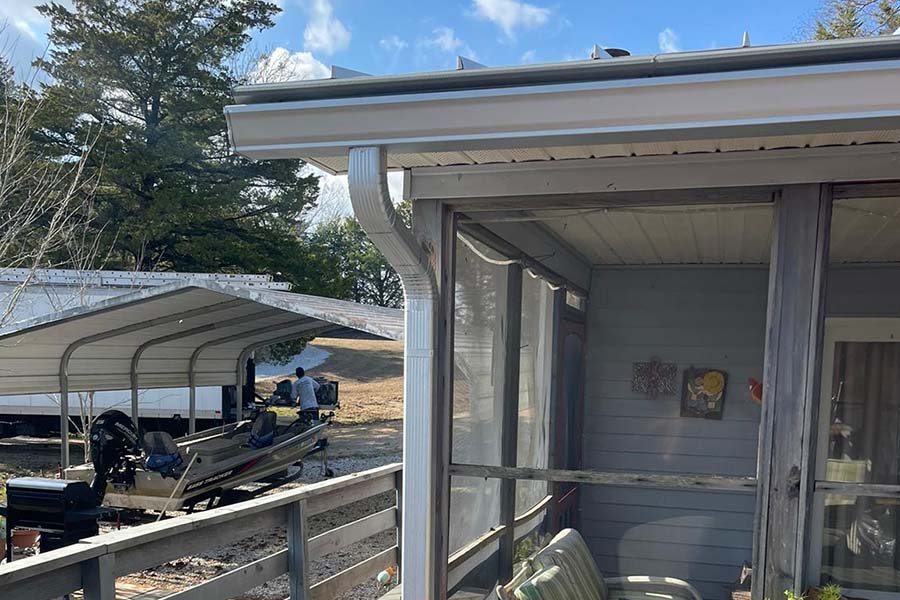
A Service Visit We Made Near Houston's Town Square
A homeowner named Dale called us after noticing that water was dripping from the eave of his home in a location that did not seem to have anything to do with where the downspout was. He had looked at it from a ladder and could not identify a crack or hole in the gutter, so he reached out to us for a more thorough assessment.
What we found was a failed joint between two gutter sections about four feet back from the end cap. The joint had been sealed at some point with an incompatible material that had bonded poorly and then cracked along the entire seam. During rain, water was escaping that joint and running along the back of the gutter behind the fascia, eventually dripping off the bottom of the eave at a point several feet from the visible joint location. From outside, it looked like a mystery. From inside the system, it was straightforward.
We cut out the old sealant, cleaned the joint surfaces, resealed with the correct material, and checked the remaining joints on the full run while we were set up. Dale said the eave drip stopped immediately and he appreciated knowing what had actually been going on. That kind of transparency is something we bring to every job.
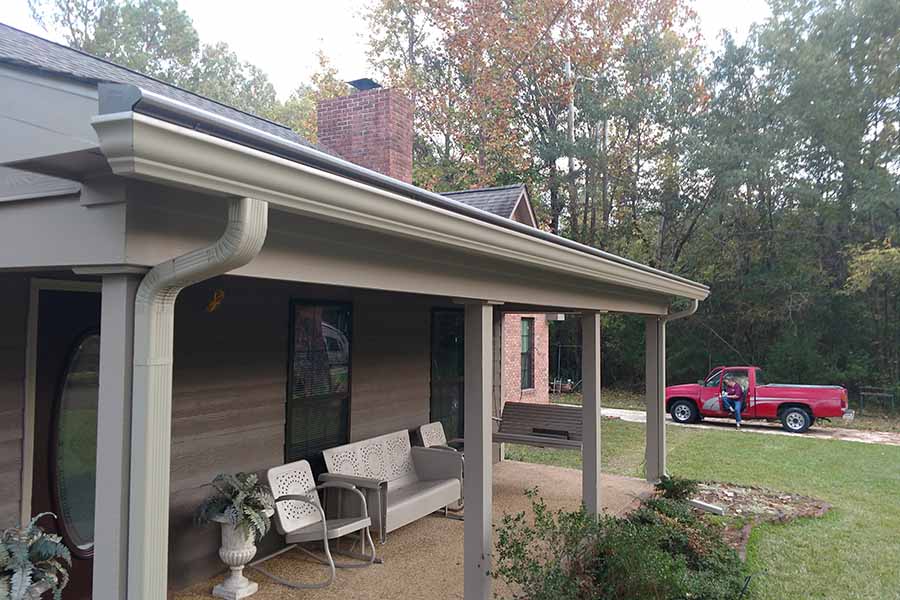

What Sets Ensz & Sons Apart for Houston Homeowners
Thirty-plus years in this business have made us very good at finding the actual cause of a gutter problem rather than just addressing what is visible from the ground. That diagnostic depth is what separates a repair that lasts from one that creates another service call six months later. We have work from the early 1990s still holding up today because we built it correctly from the start.
Every customer we work with gets honest communication. We explain what we found, why it matters, and what we recommend. We do not inflate scope and we do not leave customers guessing about what happened on their property. Our team is experienced, well-staffed, and committed to delivering quality work on every job regardless of size.
We handle the full range of gutter work, from straightforward repairs to more involved custom installations, and we can often bundle multiple exterior services into a single visit. For Houston homeowners who want a gutter repair done correctly by people who stand behind their work, we are the right company to call.
Frequently Asked Questions
My Houston home is on a sloped lot. Does that affect what kind of gutter repair I need?
Yes. On sloped lots, proper downspout placement and discharge direction are especially important because runoff moves faster and concentrates more quickly than on flat ground. We factor the terrain into every repair assessment so the solution is matched to the actual conditions of the property.
How do I know if the drip I am seeing is a gutter problem or a roof problem?
Location and pattern are the key indicators. If water appears at the eave or along the fascia rather than through the ceiling, the source is usually the gutter or the connection between the gutter and the roofline rather than the roof itself. We assess both during a visit and tell you exactly what we find.
Can old sealant be removed and replaced or does the entire section need to come out?
In most cases the sealant can be removed and replaced without replacing the section, provided the gutter material itself is still sound. We clean the joint surfaces thoroughly before applying new material so the bond is as strong as possible.
Is it possible for one gutter problem to be causing issues in multiple parts of the house?
Absolutely. Water that escapes a gutter travels along the path of least resistance, and that path can lead to moisture showing up in locations that seem unrelated to the actual failure point. We look at the full system and follow the water wherever it is going.
What should I do between now and when you can visit if I have an active gutter leak?
If water is getting behind the fascia or into the wall, placing a bucket or tarp as a temporary measure can limit interior damage. Clearing any debris from the downspout and gutter channel can sometimes reduce overflow while you wait. Call us to let us know it is active and we will work to get there as quickly as we can.